)
Nature insights
09.03.2026
Why trust is the deciding factor in nature investment
“We ran this survey to understand an important question: how do sustainability leaders really see the role …

)
Climate change is one of the leading drivers of species extinction globally. As of 2025, the IUCN Red List includes 169,420 assessed species, of which 47,187 are threatened with extinction. While habitat loss remains the single biggest driver, climate change is accelerating extinction rates, and the two threats are inseparable.
Even with these losses, there is still hope through conservation, restoration, and climate action; we can protect and revive the countless
and plant species that remain.
The IUCN Red List (2025) now lists 47,187 species as threatened with extinction - a figure that has roughly quadrupled since the turn of the century.
Climate change threatens over 14,000 species on the IUCN Red List, with projections suggesting 18% of all land species face high extinction risk at 2°C of warming.
Habitat loss, driven by human activity, remains the single biggest driver of biodiversity loss and species extinction.
Protecting and restoring ecosystems through nature-based solutions can help safeguard biodiversity and improve resilience to climate change.
Businesses can support species conservation by investing in high-quality habitat restoration and nature projects that deliver measurable environmental impact.
At Earthly, we connect businesses with high-quality, verified nature projects that directly address habitat loss and support ecosystems around the world.
to find out how Earthly can support your nature strategy, or
to explore our portfolio of vetted nature projects.
The world has an amazing array of plants and animals. It is vital for the sake of these biospheres that we work to protect them from the harmful effects of climate change. However, for some species we are acting too late, as they are already extinct.
The question of how many species are extinct due to climate change does not have a simple answer, extinction is driven by a combination of interconnected threats, with climate change accelerating the process. The
, the world's most comprehensive measure of extinction risk, now lists 47,187 species as threatened, but this statistic still doesn't tell the whole story.
The first officially recognised mammalian extinction (extinction of a mammal) was that of the Bramble Cay melomys in 2019. These small creatures were only know to have lived on a tiny island near the coast of Papua New Guinea, which due to rising sea levels has shrunk their habitat by nearly
. This area of the world, known as the Torres Strait, sea levels are rising at almost
, endangering many more habitats and hence the species that live there.

Drylands Protection project in Kenya
The Bramble Cay melomys represents a sad milestone in tracked extinctions, but with extinction science it is often hard to trace, or accurately determine species numbers. Many of the estimated extinctions that occur are in species that haven’t officially been found or named, but are identified later through museum and scientific records.
As well as this, there is a long list of species that are categorised as ‘extinct in the wild’ (EW). This is a categorisation by the
, which states that a plant or animal is EW “when it is known only to survive in cultivation, in captivity or as a naturalised population (or populations) well outside the past range”. This categorisation is the last stop on the
before the extinction category.
According to the
, there are now 88 species classified as extinct in the wild, up from around 80 when this article was first published. Some examples of animals within this category are
:
Père David’s Deer
Hawaiian Crow
Franklin Tree
Wyoming Toad
Looking historically, extinction is a natural process. At some stage all things come, live and then eventually die out. However, extinction is now happening up to
than the natural extinction rate – and extinction rates are still accelerating!
The key drivers of biodiversity loss have been highlighted as overfishing, pollution and climate change. With the single biggest contributing factor being the destruction of natural habitats.
Overfishing is the unsustainable method of fishing, with too many fish being caught to allow fish populations to recover. In large fishing operations, lots of other marine life may be affected, through the indirect impact on entire ecosystems to the direct accidental fishing of animals not for consumption such as turtles and dolphins. It is estimated that over a third of fish stocks are being harvested at unsustainable levels, meanwhile there has been over a
since 1870.

The dredge in action. © Photo by NOAA on Unsplash
All plants and animals have a temperature range within which they are best suited and thrive. One of the key ways in which climate change causes extinction is through rising global temperatures, which mean that these species are no longer comfortable living in their traditional habitat. Forced to either adapt or move to escape this, many species are then put under a large amount of pressure to survive.
As of 2024, climate change threatens over
, and projections suggest that if global temperatures increase by 2°C by 2100, around 18% of all land species will face a high risk of extinction.
Aside from this cause, scientists have identified proximate causes (direct causes as a result of climate change) which are responsible for the extinction of multiple species. Some examples of these
are: the negative impacts of heat avoidance behaviour, climate-related loss of host and pollinator species, and the positive impacts of climate change on pathogens and competitors.
Make a positive impact -
to help them get started investing in nature.
Pollution, overfishing and climate change all contribute to habitat loss which has been cited as the biggest driver in the declining rates of biodiversity, and the rocketing rates of extinction.
of the terrestrial environment (earth’s land surfaces), have been severely altered as a result of human actions. One of the clearest examples of habitat destruction is the deforestation that’s occurring around the world – but most destructively in the Amazon.

Volunteers planting native trees as part of a degraded forest restoration project in Spain, helping to rebuild habitat, improve ecosystem resilience, and support biodiversity recovery.
are a great way to combat habitat loss since they involve a nurturing, protective and holistic approach to fighting enhanced greenhouse gas emissions and their impacts. Through an understanding that the best way to do this is by preserving and replacing ecosystems and habitats, we are able to both sequester carbon more efficiently as well as sustainably while protecting the planet’s biodiversity.
Research from the World Bank finds that nature-based solutions such as river restoration and habitat protection can lead to an estimated 67% increase in local species richness - demonstrating their effectiveness not just for carbon, but for biodiversity recovery.
Everything in the natural world is interconnected with each other meaning that the extinction of one species has direct consequences on others. This is because the destruction of habitats and land clearances can drive the spread of diseases such as COVID-19.
The close proximity and resulting interactions between humans and animals as a consequence of these land clearances are now increasingly common, and hence infections and diseases such as COVID-19 can spread across species.
In fact many scientists and ecologists agree that the greater we endanger other life on Earth, the greater we endanger ourselves by amplifying the effects of climate change.
“In pushing other species to extinction, humanity is busy sawing off the limb on which it perches.”
As it stands the IUCN Red list notes that there are
over 900 extinct species and over 80 species extinct in the wild
. However, there are
labelled as vulnerable,
as endangered and
which are categorised as critically endangered.
These numbers may seem surprising and there’s a good reason why. When many of us think of endangered species, we often think of the popular or cute animals known as flagship species, but there are thousands of other animals within the same habitats that are equally as vital to a thriving ecosystem.
“How we choose which species live or die is deeply flawed, that our bias for preserving cute and fuzzy animals diverts precious resources from creatures that actually keep our planet humming.”
Again, nature based solutions, which provide a holistic approach to protecting ecosystems, could be the key to preventing many extinctions. When all plants and animals are valued highly for their part within a habitat, then they are more likely to survive and hopefully thrive. It is key to know that we have a say in the future of our planet and the life that lives on it to prevent extinction.
To learn more about nature-based solutions, download the
.
You can also
to explore how your business can take action for nature.
As nature-related risks move up the corporate agenda, disclosure frameworks like TNFD, CSRD, and SBTN are reshaping expectations around transparency and corporate action on nature. Businesses need credible ways to demonstrate their contribution to nature recovery and the real-world impact of their investments.
Earthly's
connects businesses with high-integrity nature projects that have been rigorously assessed through Keystone, our science-backed framework evaluating more than 160 indicators across carbon, biodiversity, and people integrity.
Our
provide clear visualisations of project outcomes, helping businesses understand and track the impact of their investment over time. This makes it easier to measure and evidence impact, meet evolving reporting requirements, and tell a crediblesustainability story to stakeholders without greenwashing.
To learn more about nature-based solutions, download the
. You can also
to explore how your business can take action for nature.
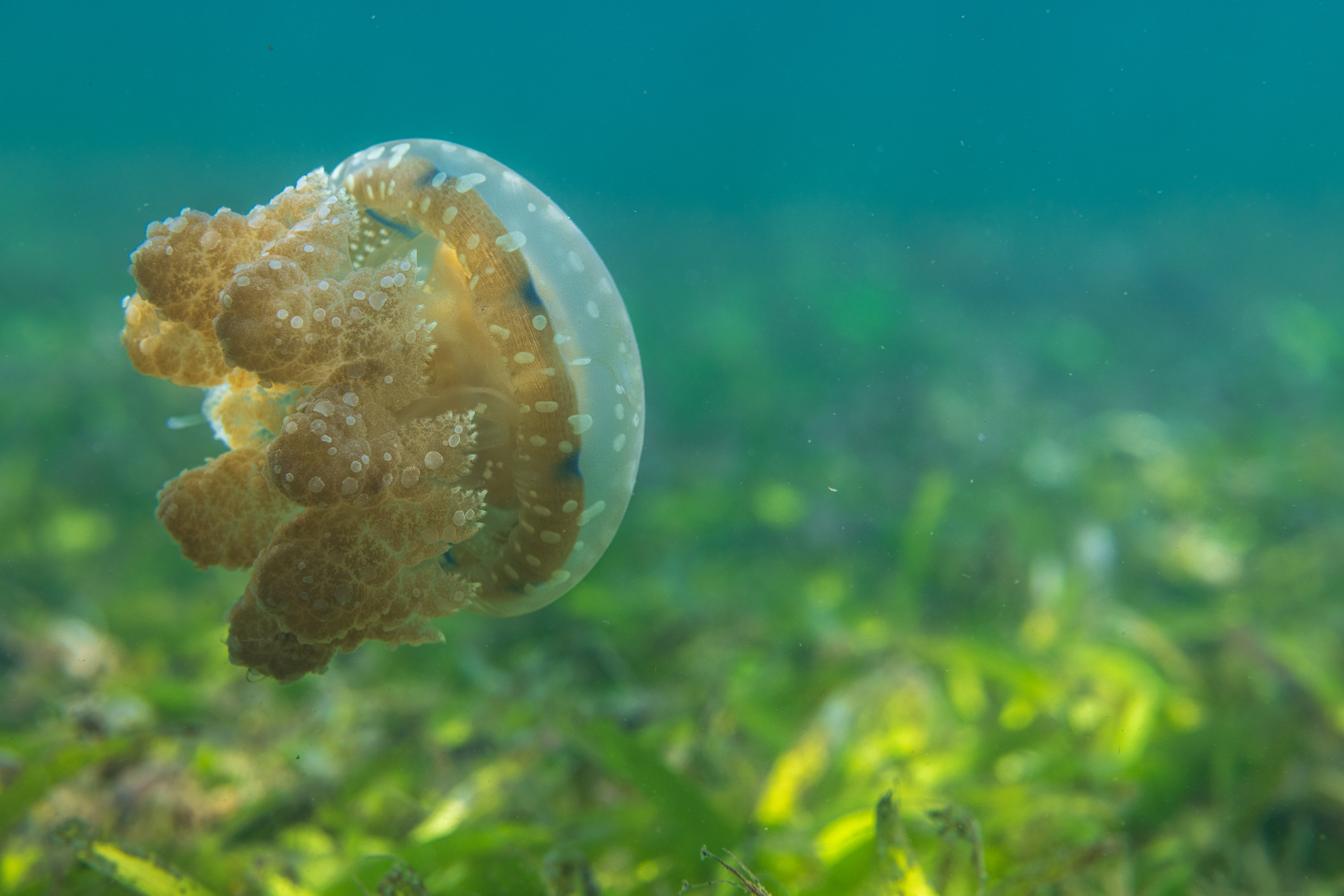
Although oceans cover more than 70% of the Earth's surface, scientists estimate that around 80% of marine species remain undiscovered, highlighting the importance of protecting coastal ecosystems like those found in Vanga Bay.
How many species are extinct due to climate change?
The Bramble Cay melomys is the first species officially declared extinct primarily due to climate change. More broadly, the IUCN Red List (2025) now lists 47,187 species as threatened with extinction, with climate change identified as a contributing threat to over 14,000 of them.
What is the current extinction rate?
Current extinction rates are estimated to be 1,000 to 10,000 times higher than the natural background extinction rate, according to WWF. Scientists calculate that between 0.01% and 0.1% of all species will become extinct each year under current conditions, representing potentially thousands of species lost annually.
What is the IUCN Red List?
The IUCN Red List of Threatened Species is the world's most comprehensive database on the conservation status of animal, plant, and fungi species. It classifies species across nine categories, from Least Concern to Extinct, and is used by governments, businesses, and conservation organisations to inform action and policy. As of 2025, it includes assessments for 169,420 species.
What are nature-based solutions and how do they help prevent extinction?
are conservation and restoration approaches that work with natural processes to protect and restore ecosystems. They include reforestation, wetland restoration, peatland protection, wildlife corridors, and marine protected areas.
Evidence shows they can increase local species richness by up to
and are among the most cost-effective tools available for both preventing extinction and sequestering carbon.
How can businesses help prevent species extinction?
Businesses can help prevent species extinction by investing in verified
that protect and restore critical habitats, reducing their supply chain impact on biodiversity, and aligning with frameworks like TNFD and SBTN.
Related articles
09.03.2026
“We ran this survey to understand an important question: how do sustainability leaders really see the role …
)
19.01.2026
Nature positive is a sustainable business approach that aims to actively reverse nature loss by restoring ecosystems, increasing …
)
04.12.2024
A set of rules for the carbon market have been accepted at the COP29 climate summit. What do …